
Alta Lake Whistler: What to Know Before You Explore by eBike
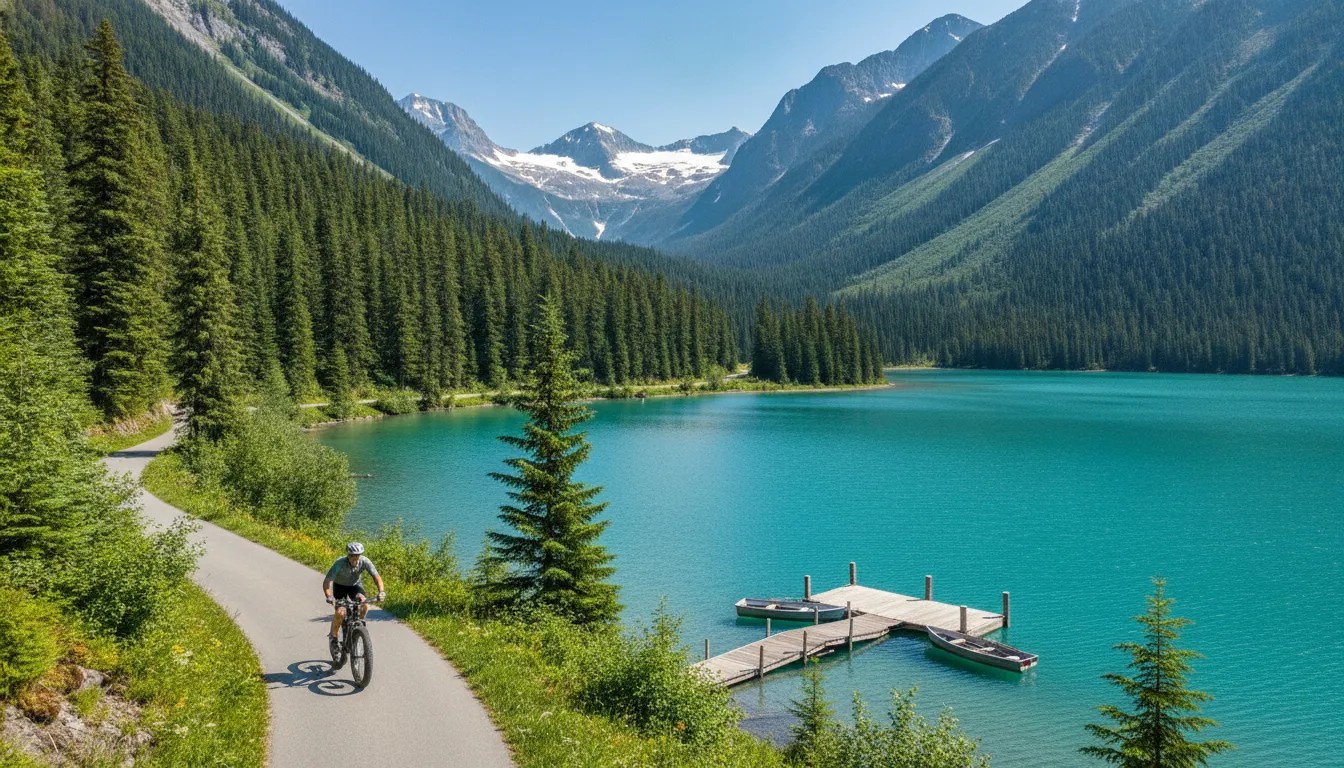
Some of Whistler’s most memorable scenery is easy to reach when you know where the Valley Trail leads. South of the village, a broad alpine lake sits among mountain slopes, wetlands, beaches, and forest. Its glacier-fed setting gives the shoreline a distinctly northern character, while the connected waterways create habitat for birds and other wildlife. It is the kind of place that rewards a slower pace and a closer look.
Before exploring alta lake, plan for a scenic, low-stress outing rather than a difficult trek. The lake is accessible from the paved Valley Trail, with viewpoints and park areas that make it easy to pause. Take photographs, watch for wildlife, or enjoy the water’s mountain setting. A guided Fat Tire eBike Adventure Tour adds local guidance and comfortable electric assistance, passing the lake as part of a wider route through Whistler’s natural highlights.
That broader perspective is part of the appeal. Instead of treating the shoreline as an isolated stop, you can see how glacial water, changing elevation, wetlands, and the Valley Trail fit together in one living landscape. The route is designed to be welcoming for visitors ranging from teens to seniors, with plenty of opportunity to settle into the scenery. Book a guided Fat Tire eBike Adventure Tour when you are ready to explore it with a local team.
To appreciate why this lake looks and feels so distinctive, it helps to start with the forces that shaped its water, shoreline, and place in Whistler’s alpine environment.
What Makes Alta Lake a Glacier-Fed Alpine Lake
Alta Lake feels expansive because it is more than a scenic stop beside Whistler’s Valley Trail. At 642 metres above sea level, this glacier-fed alpine lake sits in a mountain setting where snowmelt and glacial runoff help shape the landscape and its water. The result is a destination that connects an easy outdoor ride with the natural systems behind Whistler’s lakes.
The lake covers approximately 1.1 square kilometres and stretches about 2.2 kilometres from end to end. Its southern end marks a watershed divide between the Green River and Cheakamus River basins, giving Alta Lake an important geographic role as well as a recreational one. From the shore, those details are easy to miss. You see forested slopes, open water, and mountain views. Looking more closely, the lake is part of a larger network of streams, wetlands, and river basins that move water through the valley.
How glacial runoff shapes the lake
Glaciers influence high-elevation lakes in several ways. Seasonal meltwater carries minerals and fine sediment into mountain watersheds, while the timing and volume of runoff affect aquatic conditions through the year. Research from the U.S. Geological Survey describes how mountain glaciers can influence the biogeochemical and ecological characteristics of high-elevation lakes.
That does not mean every visit looks the same. Light, weather, season, and runoff can change the colour and character of the water. It is one reason to slow down at the shoreline rather than treating Alta Lake as scenery viewed in passing. The surrounding alpine environment is an active system, not a fixed backdrop.
A meaningful stop on the alpine lakes route
Alta Lake is one of three glacier-fed alpine lakes included on the guided Fat Tire eBike Adventure Tour. The route uses Whistler’s extensive Valley Trail network, allowing guests to experience the area at a relaxed pace without making the ride feel like a fitness challenge. Along the way, a guide can add context to what you are seeing, including why water quality matters in a mountain watershed.
British Columbia monitors Alta Lake water quality as part of its lake monitoring work. You can review the province’s Alta Lake monitoring results summary for official information. That care reflects the lake’s value beyond beaches and viewpoints. Alta Lake is a place to enjoy, but it is also a living alpine environment worth observing respectfully. Keeping shorelines clean, and leaving the water and surrounding habitat undisturbed.
The Wildlife Habitat Around Alta Lake
Alta Lake is more than a scenic place to pause beside the water. Its shoreline, wetlands, creek channels, and forest edges form a varied habitat where visitors may notice birds, beaver activity, and other wildlife moving through the landscape. Rainbow Park sits on the lake’s shore, named for the historic Rainbow Lodge, and provides an easy starting point for observing the area without leaving the established paths.
The northern end of the lake is especially connected to the wetlands of the River of Golden Dreams, also known as Alta Creek. This waterway links Alta Lake with Green Lake and runs through a municipal ecological preserve. The mix of open water, marshy edges, and dense vegetation creates useful shelter and feeding areas for birds. Depending on the season and conditions, patient observers may see waterfowl, songbirds, or birds of prey travelling between the lake and surrounding forest. The preserve is habitat first, so the best viewing is quiet and unobtrusive rather than close or prolonged.
What you may see near the shoreline
Beaver lodges and signs of beaver activity are among the most memorable features of Whistler’s wetland environment. Look for carefully placed branches, worn channels, or a lodge set back from the busier shoreline. You may also notice smaller wildlife in the trees and undergrowth, but sightings are never guaranteed. Wildlife changes its behaviour with weather, season, daylight, and visitor activity. That uncertainty is part of the experience, and it is a good reason to slow down instead of treating the trail like a checklist.
Alta Lake’s alpine setting also matters to the habitat around it. Glacial runoff influences the ecological characteristics of high-elevation lakes, and the British Columbia Ministry of Environment monitors water quality in Alta Lake. Protecting that environment means keeping food and litter secured, staying on the trail, avoiding the edges of bird sanctuaries and wetland areas, and giving animals plenty of room. Never approach a beaver lodge, nesting bird, or young animal, even if it appears calm.
A quiet way to explore by eBike
The paved Whistler Valley Trail makes it easy to reach viewpoints around Alta Lake without turning wildlife watching into a strenuous outing. An eBike lets you cover more of the shoreline at a comfortable pace, then stop well away from animals when something catches your attention. Keep your speed low near pedestrians, pass quietly, and pause with the bike fully off the route so others can move safely. A calm approach gives wildlife space and leaves the habitat just as you found it.
A Short History of Alta Lake and Rainbow Lodge
Alta Lake’s story begins with names that reflect how people have understood this landscape over time. Before it was called Alta Lake, the lake was known as Summit Lake. The name Alta, taken from the Spanish word for “high up,” was adopted in 1930. Helping distinguish it from other lakes in British Columbia that shared the Summit Lake name.
That later name is only one layer of the lake’s history. The L’il’wat name for Alta Lake and Nita Lake is Xwel’pil’cten. It carries a much older cultural connection to the water and surrounding valley than the modern resort community. A separate 1914 story from a railway crew tells of a serpent trap on the lake. A memorable legend that hints at the mystery visitors have long attached to this mountain setting. Stories like these give Alta Lake more depth than a scenic stop on a route. It is a place shaped by Indigenous knowledge, travel, work, and imagination.
For a visitor, the changing names offer a useful reminder to look beyond the postcard view. A lake can be a landmark, a route marker, a source of stories, and a gathering place at the same time. Alta Lake holds all of those meanings in one shoreline. The calm water and mountain backdrop may feel timeless, yet the names attached to it reveal a landscape that has continued to change while remaining recognizably itself.
Rainbow Lodge and Whistler’s early visitors
In about 1914, pioneer Myrtle Philip built Rainbow Lodge at the northern end of the lake. The lodge helped establish the area as a destination for visitors who came to spend time beside the water and in the surrounding mountains. Its name lives on at Rainbow Park, while the original lodge site remains part of the landscape’s heritage.
The northern end also shows how history and conservation can share the same ground. The former Rainbow Lodge site sits beside an ecological preserve that extends through the wetlands of the River of Golden Dreams. Also known as Alta Creek, toward Green Lake. These wetlands connect the lake’s human story with the waterway and habitat that continue to define the valley. The River of Golden Dreams is not just a picturesque route; it is part of the living geography around Alta Lake.
Alta Lake also occupies an important natural position. Its southern end marks the divide between the Green and Cheakamus river basins, adding another geographic distinction to the lake’s history. Today, visitors can reach the shoreline and Rainbow Park along the paved Valley Trail, but the setting rewards a slower look. Notice the wetlands, imagine the early lodge guests arriving by trail or water, and consider how many different names and stories have gathered around the same lake.
Can You Walk Around Alta Lake?
Yes, you can enjoy a scenic walk beside Alta Lake, but you cannot follow a continuous public path all the way around its shoreline. The lake is the largest in Whistler and has three popular waterfront areas: Lakeside Park, Rainbow Park, and Wayside Park. Each offers a different place to pause, take in the mountain views, and experience the lake without needing to complete a full loop.
For the most straightforward lakeside walk, start at Rainbow Park. The park is reached by the paved Whistler Valley Trail, making it a practical option for visitors who want a relaxed outing rather than a rugged hike. From the shoreline, you can look across the water toward the surrounding mountains, then continue along accessible trail sections or return to the park. Lakeside Park and Wayside Park provide additional access points on other parts of Alta Lake.
What to expect on the shoreline
Alta Lake is about 10 minutes south of Whistler Village by road, so it is easy to include in a day of sightseeing. Walking is one option, but visitors can also reach the lake by local bus or bicycle. The Valley Trail connects many parts of Whistler and provides a comfortable way to travel between lake access points without relying entirely on a car.
If you are hoping to walk around the entire lake. Plan your route around the specific parks and trail sections you want to visit rather than expecting a marked shoreline circuit. Roads, private properties, wetlands, and changing terrain interrupt the waterfront in places. A point-to-point outing can be more enjoyable because it lets you focus on the views, beaches, and quiet spaces instead of treating the lake as a distance challenge.
A flexible way to see more of Alta Lake
A bike makes it easier to combine several access points in one outing. The guided Fat Tire eBike Adventure Tour uses Whistler’s Valley Trail network and passes by Alta Lake as part of a broader route. The assisted ride is designed for accessible sightseeing, so you can take in the scenery while covering more ground than you would on foot. Whether you walk from Rainbow Park, arrive by bus, or explore by eBike. Alta Lake is best experienced as a collection of welcoming waterfront stops rather than a single loop trail.
How Far Is Alta Lake From Whistler Village?
Alta Lake is roughly 10 minutes south of Whistler Village by road, making it an easy addition to a day of sightseeing. The exact travel time depends on traffic, your starting point, and which of the lake’s access points you choose. But the short distance means you do not need to plan an ambitious outing to enjoy the shoreline.
Taking the Valley Trail
For visitors who would rather experience the landscape than simply drive through it, the paved Valley Trail is the most scenic option. The trail connects Whistler’s neighbourhoods, parks, and lakes, giving walkers and riders a more relaxed route toward Alta Lake. Rainbow Park, at the lake’s northern end, is reachable via the Valley Trail and offers an easy place to stop by the water. Summer visitors should note that parking at Rainbow Park is pay parking.
A bike makes the journey especially straightforward. The route is accessible for a wide range of riders, and an eBike helps keep the focus on the views rather than the effort of covering the distance. Families with teenagers, couples, and older visitors can take their time, pause for photographs, and enjoy the changing scenery along the way. If you want to understand the route before setting out, our Whistler Valley Trail guide provides more local context.
Using the bus or driving
Bus and local transit services can also be practical for reaching the Alta Lake area. Particularly if you are carrying beach gear or planning to spend several hours at the shore. Check current routes, schedules, and stop locations before leaving, since seasonal service and operating times can change. Transit may bring you close to the lake, but you may still need a short walk to reach your preferred park or beach.
Driving is the simplest choice when convenience or equipment is the priority. Follow local signs toward the lake and confirm parking conditions at your chosen access point before you go. Rainbow Park is one well-known destination, while Lakeside Park and Wayside Park provide additional shoreline access. Because parking demand can rise during warm summer days, arriving early or choosing the Valley Trail can make the outing easier.
For a low-stress way to combine the ride with local highlights, Whistler Electric Bike Tours uses the Valley Trail on its guided experiences. The easy route lets you reach Alta Lake without having to navigate the area alone, while a local guide helps you make the most of the journey.
How the Fat Tire eBike Adventure Tour Passes Alta Lake
Alta Lake is more than a scenic pause along the route. It is one of Whistler’s three glacier-fed alpine lakes, and the guided Fat Tire eBike Adventure Tour gives visitors an easy way to experience its shoreline. Surrounding forest, and connected waterways without planning the route themselves. The tour covers approximately 23 to 27 kilometers through Whistler, using sections of the 300-plus-kilometer Valley Trail network.
| Way to explore Alta Lake | Best for | Effort |
|---|---|---|
| Walks from Rainbow, Lakeside, or Wayside Park | Slow shoreline time, swimming, park stops | Easy, limited reach |
| Local bus or transit | Carrying beach gear, spending a full day | Low, needs a short walk at the end |
| Driving | Convenience and equipment | Low, watch summer parking |
| Guided Fat Tire eBike tour | Seeing multiple lakes and habitats in one outing | Easy, assisted riding |
That distance may sound substantial, but the eBike does the hard work. Riders do not need a high level of fitness or previous trail experience. With guidance from a local tour leader, the route is designed to feel comfortable and approachable for a wide range of guests. Including families with teenagers, couples, and older visitors who want to enjoy the landscape at a relaxed pace. You can focus on the views, the fresh mountain air, and the possibility of spotting wildlife rather than worrying about navigation or keeping up with a demanding ride.
A scenic route through Whistler’s lake district
The Valley Trail makes the journey to Alta Lake especially enjoyable. Its connected paved and low-stress paths link neighborhoods, forests, parks, and lakes, creating a natural sightseeing route through the resort community. A local guide can point out details that are easy to miss on your own, from changing mountain perspectives to quiet habitat along the water’s edge. For a closer look at the route network, see the Whistler Valley Trail guide.
Alta Lake is Whistler’s biggest lake and has three popular beaches: Lakeside Park, Rainbow Park, and Wayside Park. Depending on the route and conditions, these open shoreline areas provide different views across the water and toward the surrounding mountains. They also make the lake feel accessible for visitors who want a scenic outing rather than a technical cycling challenge.
Where Alta Lake connects to the River of Golden Dreams
The lake is part of a larger waterway system. The River of Golden Dreams, also known as Alta Creek, links Alta Lake with Green Lake. Wetlands and forest near this connection create opportunities for wildlife viewing. So keep your eyes open and let your guide set the pace when the surroundings become especially interesting. Wildlife is never guaranteed, but a quiet, guided ride gives you a better chance to notice birds and other animals without rushing through the habitat.
If you want an easy, locally guided way to see Alta Lake as part of a broader Whistler outing, explore the Fat Tire eBike Adventure Tour. The experience combines practical route support with time to appreciate one of the area’s defining alpine landscapes.
Frequently Asked Questions
Is Alta Lake swimmable?
Yes, swimming is a popular summer activity at Alta Lake, although water temperatures can remain cold because the lake is glacier fed. Choose a designated beach such as Rainbow Park, Lakeside Park, or Wayside Park, and follow posted advisories and local water-safety guidance. Conditions can change, so check signs at the beach before entering the water. If you prefer to enjoy the scenery without swimming, the shoreline parks and Valley Trail provide easy alternatives for a picnic, walk, or scenic bike ride.
How far is Alta Lake from Whistler Village?
Alta Lake is roughly 10 minutes south of Whistler Village by road, according to What To Do in Whistler. The exact travel time varies with traffic, parking, and your starting point. The lake is also connected to Whistler’s paved Valley Trail network, which makes it practical to reach by bicycle. A guided Fat Tire eBike Adventure Tour offers an easy way to travel through the valley while learning about the landscape. Rather than relying only on a car or trying to plan every turn yourself.
Can you walk around Alta Lake?
You can walk along portions of the Alta Lake shoreline and visit its three public beach areas. But there is not one simple, continuous lakeside path that functions like a complete loop around the water. Rainbow Park is reachable by the paved Valley Trail, while Lakeside Park and Wayside Park offer other shoreline access points. Plan your route around the park you want to visit, available time, and seasonal parking conditions. Stay on marked paths near wetlands and respect wildlife habitat, especially around the River of Golden Dreams and Alta Creek.
What is the best way to see Alta Lake?
The best option depends on how much time and independence you want. Walking works well for a relaxed visit to one park, while a personal bicycle gives you flexibility along the Valley Trail. A guided Fat Tire eBike Adventure Tour is useful if you want an accessible, narrated outing that includes Alta Lake as part of a wider Whistler landscape. The tour passes the lake on the Valley Trail and visits glacier-fed alpine settings, with a guide handling route-finding while you focus on the views. Allow extra time for photos and shoreline stops, and follow park rules to help protect this habitat.
Book Your Alta Lake eBike Adventure
Alta Lake brings together clear mountain scenery, a living wetland connection, and an easy way to experience Whistler beyond the village streets. A guided ride along the Valley Trail lets you take in the lakeshore setting while learning more about the landscape from a local guide. The Fat Tire eBike Adventure Tour is designed to make the journey comfortable and enjoyable. So you can focus on the views, the fresh air, and the character of Alta Lake rather than planning every turn yourself.
If seeing Alta Lake from the Valley Trail sounds like the right addition to your Whistler plans, book a guided Fat Tire eBike Adventure Tour through Whistler Electric Bike Tours. Choose a date that fits your visit, and let the team help you turn a scenic lake stop into a memorable part of your day.